
The steps at a glance
The Ministry for Regulation’s July 2026 review of the solar installation process describes the same sequence for a typical home: consent where needed, an application to the lines company, installation, an independent electrical inspection, a meter change by the metering provider, and switch-on once the paperwork is in. The table puts a responsible party and a published timeframe against each step. Where no organisation publishes a figure, it says so rather than guessing.
| Step | Who does it | Published timeframe |
|---|---|---|
| 1. Quotes, choosing an installer, paying a deposit | You, with two or three installers | Up to you. EECA says the deposit is usually 10% to 30%, paid after you accept a quote |
| 2. Building consent check | Installer, with an engineer if the array is large or the site is very windy | Usually no wait: most roof arrays have not needed consent since 23 October 2025 |
| 3. Lines company application and export limit | Installer lodges it; the lines company decides | EECA: generally 1 to 2 weeks. Orion aims for 5 working days for 15 kW or less |
| 4. Buy-back plan and meter request | You choose the plan; your retailer arranges the meter | No regulated deadline. Contact: up to 15 working days for a standard meter install |
| 5. Installation | Installer and electrician | EECA: usually 1 or 2 days on site |
| 6. Certificate of compliance and inspection | Electrician certifies; an independent inspector checks | EECA: from the next day to several weeks in busy periods |
| 7. Paperwork to the lines company, switch-on, handover | Installer | Certificates due within 10 working days for Orion, 10 days for MainPower, 5 days for Alpine Energy |
| 8. Exports recorded and paid | Retailer and metering company | From the day the meter is set up; not backdated automatically |
Steps 3 and 4 can run side by side, and so can the inspection booking and the meter request. The quickest jobs are the ones where the installer starts the lines company application and you start the meter conversation with your retailer in the same week you sign.
1. Quotes and a signed contract
Meridian suggests getting at least two or three quotes if you have time. Each should name the panels, the inverter and its certification, any battery, the export limit the savings forecast assumes, and every cost, including the lines company fee, the inspection and any meter charge. EECA says the inspection cost should be included in the installer’s quote. Our solar quote checker lets you test a price against published medians, and the 2026 cost guide explains what drives the total.
Before you sign, get the answers to four questions in writing: who lodges the lines company application, who books the inspection, who contacts the retailer about the meter, and who sends the final certificates to the lines company. Most of the delays described below happen when each party assumes another one has done something. Our list of common solar quote mistakes covers the rest of what to settle, and our finance guide covers green loans if you are borrowing.
EECA says the deposit is usually 10% to 30% of the total and is paid after you accept a quote. Keep the signed quote: it is the document the installer’s workmanship warranty and any later dispute will rest on.
2. Building consent check
Since 23 October 2025, roof-mounted solar arrays have had their own exemptions in Schedule 1 of the Building Act. Building Performance’s summary sets out two cases:
- An array under 40 m² in a wind zone no higher than high is exempt from building consent.
- An array over 40 m², or in a wind zone above high, is exempt only if a Chartered Professional Engineer carries out or reviews the design.
A typical home panel is about 2 m², so 40 m² is roughly 20 panels. The exemption removes the consent, not the rules: the work must still meet the Building Code, your district plan and the conditions of the exemption, and Building Performance says the installation must avoid affecting the building’s structure and weathertightness. EECA puts it simply: building consent is no longer required for rooftop panels on most existing homes, with some exceptions. Ask the installer to confirm your wind zone and say in writing which exemption the job relies on.
The roof itself is the bigger question at this stage. If it needs repair or replacing within the life of the panels, do that first. Our roof guides cover metal and Colorsteel, concrete and clay tile and flat and membrane roofs, and our roof suitability guide covers direction and shade. A ground-mounted array or a large system on a rural property can need a resource consent; the Ministry for Regulation’s review notes this, and our lifestyle block guide covers ground mounts.
3. Lines company approval and your export limit
Every grid-connected system needs written approval from the lines company that owns the local network before it is connected. The installer normally lodges the application. The approval sets your export limit, which is the most power the house may send to the street at any moment. EECA says that for a system under 10 kW this should be quick and easy, with minimal cost, and that approval generally takes one to two weeks.
Three national rules shape this step:
- The simplified route. Since 11 May 2026 the Electricity Authority’s Export Limits Amendment has made 10 kW the default export limit for straightforward connections of 10 kW or less on the simplified Part 1A process. A lines company can set a lower limit only where a network assessment shows it is needed.
- Decision times. Lines companies publish decision times that follow the Code’s process. Alpine Energy, for example, gives 10 working days for a complete Part 1A application and 30 working days on the fuller Part 1 route. The clock starts when the application is complete, and on some networks only once the fee is paid.
- The inverter standard. From 11 September 2026, applications for low-voltage generation must use an inverter certified to AS/NZS 4777.2:2020. Ask for the inverter model and its certification on the quote.
Do not let the installer book the installation until the written approval arrives, and keep it. If approval is still pending, ask for a second savings forecast at a lower export limit so you know what the system is worth if the answer comes back smaller.
Canterbury lines companies compared
Canterbury has four lines companies, and each sets its own fee, timing and paperwork deadline. If you are not sure which one serves your address, the 15-character ICP number on your power bill identifies the connection, and your retailer can tell you which network it is on.
| Lines company | Application fee for a home system | Published decision time | After installation |
|---|---|---|---|
| Orion (Christchurch, Selwyn, Banks Peninsula) | $140 plus GST for 15 kW or less | Aims for 5 working days for 15 kW or less; larger solar may take 10. Processing starts once the fee is paid | Certificate of compliance and record of inspection within 10 working days. The system must not be switched on until Orion acknowledges them |
| MainPower (North Canterbury, Kaikōura) | No fee under 10 kW | No target time published | Certification within 10 days of commissioning, or MainPower may isolate the supply |
| EA Networks (Mid Canterbury) | $140 plus GST on the simplified Part 1A route, or $310 plus GST on Part 1, for 10 kW or less | No target time published | Apply again before changing the system; a $110 plus GST fee applies where generation runs outside its approved limits |
| Alpine Energy (South Canterbury) | $100 plus GST on Part 1A, or $200 plus GST on Part 1, up to 10 kW | 10 working days on Part 1A, 30 on Part 1, for a complete application | Livening form and record of inspection back to Alpine within 5 days of connection |
Two Canterbury details change the plan. Orion has approved inverter-based generation only where the inverter can handle dynamic export limits since 1 October 2026, so check the exact model, and any gateway it needs, before the order is placed. EA Networks names congested areas around Lauriston and on the rural lines east and west of Tinwald, where exports can be held back at times, so a Mid Canterbury quote should say whether the address is in one. Each lines company guide linked in the table has the detail, and our Canterbury solar guide brings them together. Outside Canterbury, we have guides to Network Waitaki, Aurora Energy, Wellington Electricity, Powerco and Vector.
4. Buy-back plan and meter request
Your exports earn nothing until your meter is set up to record them. EECA says the installer asks for the meter to be reconfigured for two-way metering, which may happen before or after installation day, and that until it is done you can use the power yourself but cannot sell any back. Meridian says the meter is typically handled by the company installing the rest of the system. Utilities Disputes says the retailer is ultimately responsible for coordinating the work.
This is the step to start early. Choose your buy-back plan before installation, using our buy-back rates guide or the buy-back plan comparer, so the meter is set up once with the retailer you intend to stay with. Then ask that retailer for its timeframe and fee in writing. There is no regulated deadline: Contact says a standard meter install takes up to 15 working days once your buy-back application is approved, and Meridian says an import/export meter costs around $150. Our guide to solar export meter delays explains what to do if it stalls.
5. Installation day
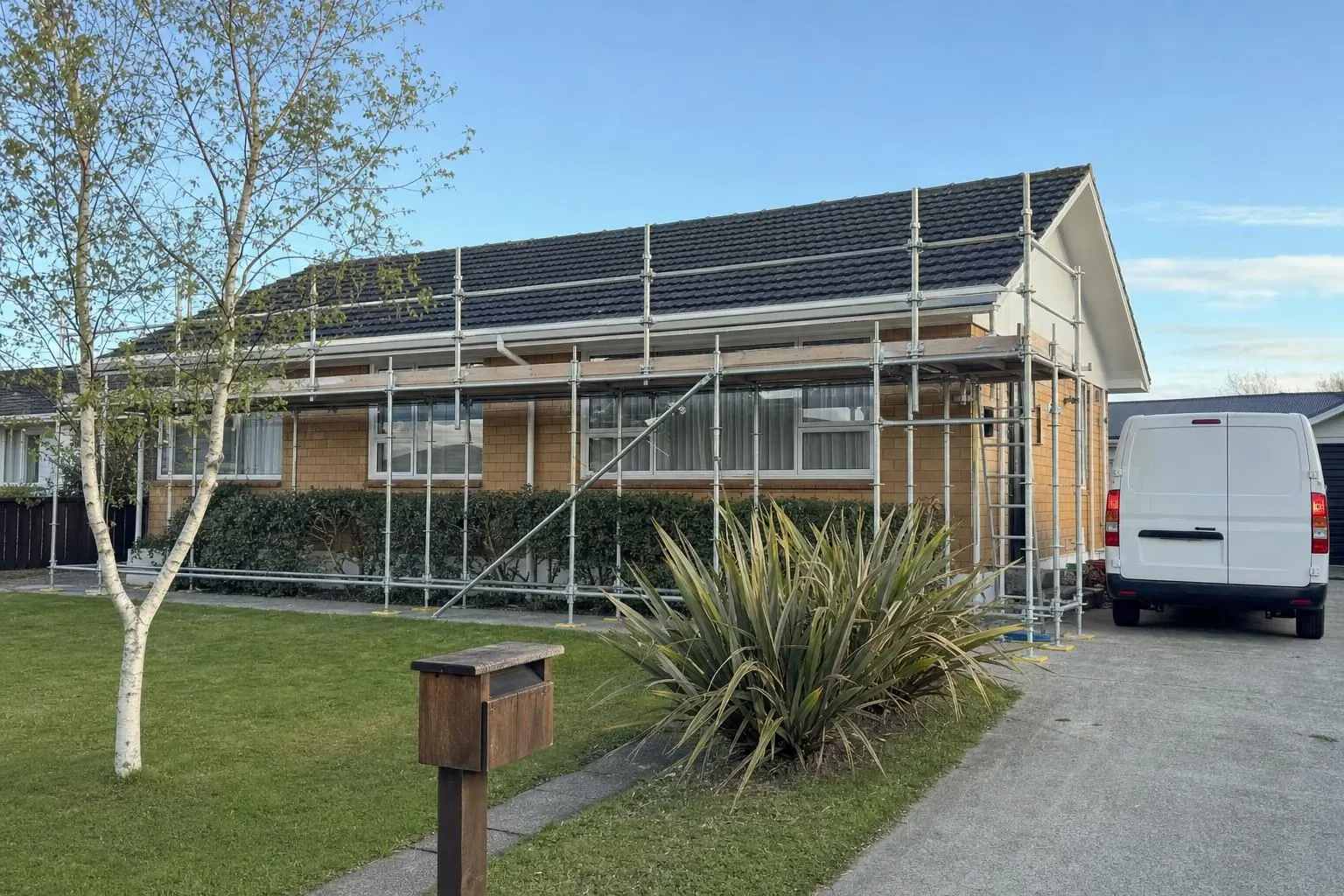
EECA says installation usually takes one or two days. The usual order is the mounting rails, then the panels, then the inverter, the cabling and the connection to your switchboard through a circuit breaker. Scaffolding or edge protection usually goes up first, and EECA notes that a job needing scaffolding can take longer overall. Meridian says the installer’s on-site team must include experienced electricians and that every connection is checked before anything is switched on.
Make sure the installer can reach the switchboard, the roof space if cables will run through it and the wall where the inverter will go. If a battery is part of the job, agree where it will sit before the day: our battery guide covers what to consider.
6. Certificate of compliance and inspection
Two documents matter here. The electrician who did the work issues a certificate of compliance. Then an independent electrical inspector checks the installation; the Ministry for Regulation’s review notes that every solar installation must currently be checked by an independent inspector, whatever its size. WorkSafe says an inspector cannot inspect work they carried out, supervised or certified, and that the record of inspection states whether the work complies and whether the installation is electrically safe. EECA says that if the work meets the requirements you will be given an Electrical Safety Certificate for the new system.
Timing is the weak point. EECA says the wait for an inspector could be the next day or several weeks in busy periods, and the Ministry for Regulation’s review found delays of up to six weeks in getting an inspection done because of inspector availability. Ask the installer when the inspection is booked, not just whether it will happen.
7. Paperwork to the lines company, switch-on and handover
The certificate and the record of inspection go back to the lines company, and the deadlines are short: within 10 working days for Orion, within 10 days of commissioning for MainPower, and within 5 days of connection for Alpine Energy. Orion says the system must not be switched on until it has acknowledged them. This is the installer’s job, but it is your connection that is at risk if the papers are late.
At handover EECA says the installer should turn the system on, show you the inverter basics, explain maintenance and troubleshooting, leave the manuals and set up any monitoring app. It lists the minimum warranties to expect: 5 years on workmanship, 5 years on a string inverter, 10 years on microinverters, 10 years on lithium-ion batteries and a 10-year product warranty on panels, with some panels also carrying a performance warranty. Our guide to looking after your panels covers what maintenance is worth doing.
8. The first bill with exports
Write down the meter reading, or take a dated photo of the display, on the day the system is switched on. When the first bill arrives, check that it has an export line. If it does not, ask the retailer whether the meter has been set up and the registry updated. Retailers generally pay from the date the meter starts recording, not from the day the panels went on, so a stalled meter costs you money.
Do not switch retailers until the meter is finished. Utilities Disputes has handled cases where a switch requested too early was rejected because the meter details did not yet match, adding months to the wait. If you are in Christchurch, Orion also credits exports at winter peak times; our guide to Orion’s winter peak export credit explains when that applies.
What usually causes delays
The Ministry for Regulation’s review found that timelines are unpredictable, with approval times and processes varying across the country. In the order they tend to bite:
- An incomplete lines company application. The decision clock starts only when the application is complete. Ask the installer for the date it was lodged and accepted.
- Inspector availability. Up to six weeks in the review’s findings. Ask for the inspection date when you book the installation.
- The meter. The review found meter upgrades are often delayed by a lack of technician availability. Starting the request early is the best defence.
- Equipment. EECA says jobs take longer if parts have to be shipped. An inverter that does not meet the 2020 standard, or Orion’s dynamic export requirement, can send an application back.
- Roof work and scaffolding. A roof that needs repairs, or a site that needs engineering because of its size or wind zone, adds a step before the panels can go on.
The Ministry’s review has recommended faster lines company approvals and a lighter inspection regime for accredited installers. Those are proposals, not current rules; our page on whether to wait for policy changes after the election tracks what has actually been decided.
Documents to keep
Keep these together from the day you sign. They are what a retailer, a lines company, an insurer, a buyer of your house or Utilities Disputes will ask for:
- The signed quote and contract, with the equipment list.
- The lines company’s written approval and the export limit it states.
- The certificate of compliance, the record of inspection and the Electrical Safety Certificate.
- The retailer’s confirmation of your buy-back plan and the meter work.
- Warranty documents for the panels, inverter, any battery and the installer’s workmanship.
- Your switch-on meter reading or photo, and the manuals and monitoring login.
If you are selling later, our guide to SolarZero contracts shows how much a buyer’s lawyer will want to see when a system is not owned outright.
Common questions about getting solar installed
How long does it take to get solar panels installed in NZ?
EECA says the process is usually complete in four weeks or less, with one or two days of work on site. It takes longer if parts must be shipped, the job needs scaffolding or extra work, the lines company approval is slow, or the inspector or meter technician is booked up. The Ministry for Regulation’s July 2026 review found inspection delays of up to six weeks.
Do I need building consent to install solar panels?
Not for most roof-mounted arrays. Since 23 October 2025, an array under 40 m² in a wind zone no higher than high is exempt, and a larger array or one in a higher wind zone is exempt if a Chartered Professional Engineer designs or reviews it. The work must still meet the Building Code and your district plan.
Who applies to the lines company for solar approval?
Your installer normally lodges the application on your behalf. The lines company decides and sets your export limit. Do not book the installation until the written approval arrives.
How much does the lines company charge to approve home solar in Canterbury?
Orion lists $140 plus GST for 15 kW or less. MainPower charges no fee under 10 kW. EA Networks charges $140 plus GST on the simplified Part 1A route or $310 plus GST on Part 1 for 10 kW or less, and Alpine Energy $100 or $200 plus GST depending on the route. Ask whether your quote already includes the fee.
Who arranges the import/export meter?
Your electricity retailer is responsible for coordinating it, although the installer often starts the request and a metering company does the work. Ask your retailer for its timeframe and fee before installation day.
Can I use my solar power before the export meter is installed?
EECA says you can generate power for your own use once the system is switched on, but you cannot sell power back until the meter has been set up for exports.
Does solar need an electrical inspection in NZ?
Yes. The electrician issues a certificate of compliance, and an independent inspector who did not do or supervise the work checks it. The Ministry for Regulation’s review notes every solar installation currently needs an independent inspection, whatever its size.
What documents should I get when my solar is installed?
The lines company approval with your export limit, the certificate of compliance, the record of inspection, the Electrical Safety Certificate, the retailer’s confirmation of your buy-back plan and meter, the warranties and the manuals.
Canterbury solar quotes
Ready for step one?
Tell us about your roof and your power bill, and get quotes from solar installers who cover your part of Canterbury. Ask each one who lodges the lines company application, who books the inspection and who arranges the meter.
Get Canterbury solar quotesSources and review date
Checked on 25 November 2026 against EECA’s guide “Understanding home solar quotes and install”; Meridian Energy’s guide “Getting solar installed: the typical process”; Building Performance’s announcement “Solar panel and boundary setback building consent exemption changes” (22 October 2025); the Ministry for Regulation’s “Improving the solar installation process” regulatory review summary report (July 2026); and WorkSafe’s page on electrical certification and record of inspection templates (updated 21 October 2026). Lines company fees, decision times and paperwork deadlines are from the sources listed on our Orion, MainPower, EA Networks and Alpine Energy guides, last checked between 12 October and 23 November 2026. The national export-limit and inverter rules are from the Electricity Authority’s Export Limits Amendment 2026 and its information sheet. Retailer meter timeframes and fees are from Contact Energy’s and Meridian Energy’s solar pages, and the meter responsibility and switching points from Utilities Disputes’ October 2026 paper on solar metering complaints, as checked for our export meter guide on 18 November 2026. Fees and processes change; confirm them with your installer, lines company and retailer before you sign.
NZ Solar is an independent quote matching service and is not affiliated with EECA, any lines company or any electricity retailer. This page is general information, not legal or electrical advice. For local advice, see our Canterbury solar guide.