
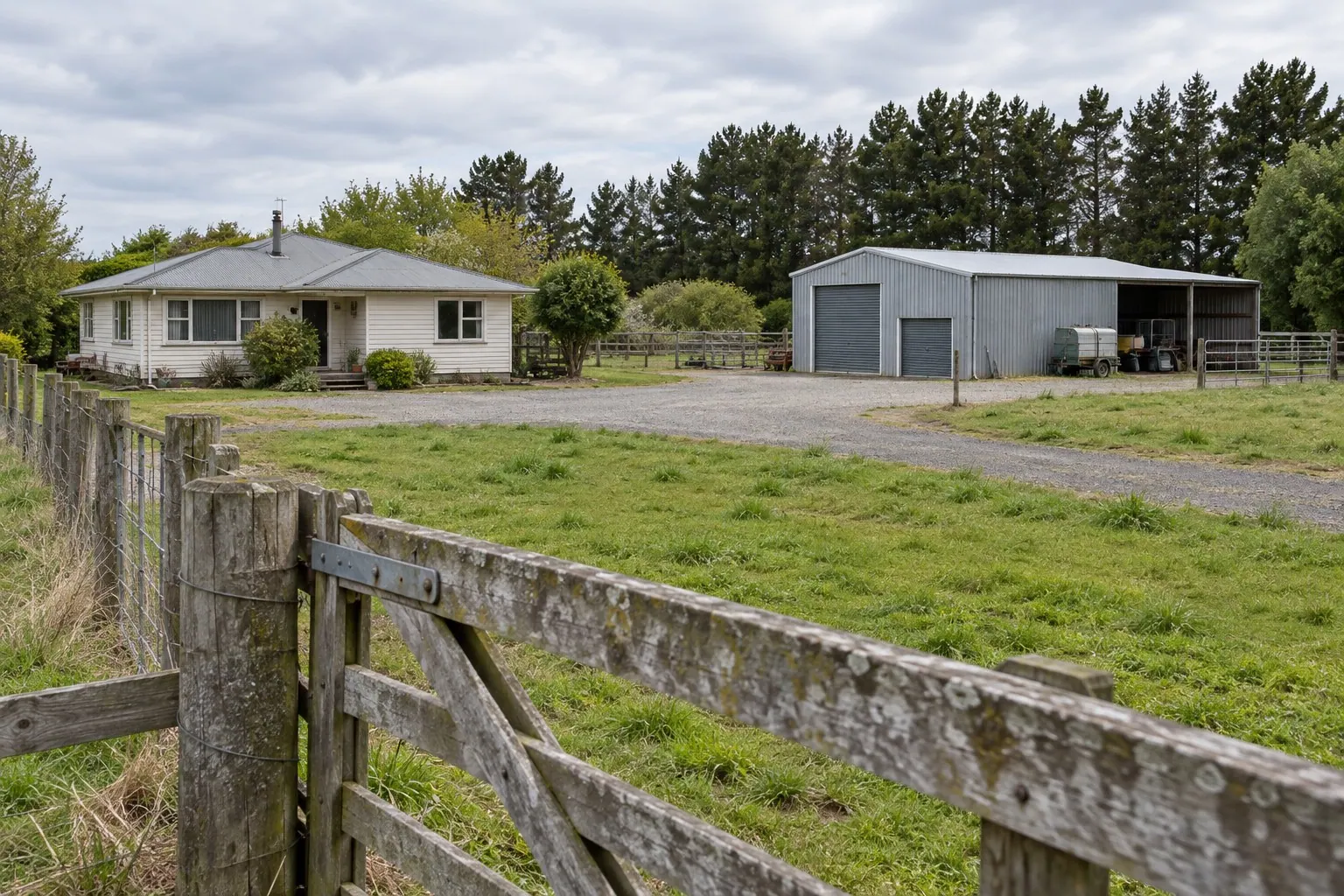
Does the shed share the house’s electricity connection?
Start with the ICP numbers on your electricity accounts. An ICP identifies a connection to the electricity network. Buildings on the same property can have separate connections. Solar behind one ICP normally offsets demand on that connection; it does not automatically supply another. EECA explains the importance of checking ICPs and phasing.
Draw a rough plan with each meter and building labelled. Ask the electrician to confirm which circuits belong together. Do this before comparing a shed-mounted system with panels on the house: otherwise the quotes may be solving different problems.
If the shed has its own account, ask for the price and implications of any proposed connection changes. Keep that work separate in the quote so you can see whether the location still makes sense.
Compare three places for the panels
| Option | What to establish before choosing |
|---|---|
| House roof | Ask for a panel layout beside the home’s electricity-use forecast. Identify any roof repairs, access costs and visible cable routes. |
| Shed roof | Ask who will assess the structure and roof condition, which ICP receives the generation, and whether the existing supply cable can support the design. |
| Ground mount | Request a site plan showing the array, cable route, access and any protection from stock or vehicles. Include foundations and reinstatement in the price. |
EECA notes that ground mounting allows more choice of direction and tilt, but brings extra framing and civil work. Longer cable runs and trenching can also add cost. The clearest patch of land is only one part of the comparison.
For either roof option, ask the installer to document mounting, wind loads and weatherproofing. BRANZ’s PV guidance covers mounting and wind-load requirements.
List the loads you actually expect solar to supply
Separate regular household demand from occasional workshop or paddock use. A welder used a few weekends a year deserves a different discussion from equipment running every afternoon. Write down operating hours as well as equipment names.
- House: who is home in daylight, and when is hot water heated?
- Pumps: what do they supply, and can their operating times change?
- Workshop: which tools run together, and how often?
- Future work: is an EV, second dwelling or new shed committed, or only a possibility?
Ask for separate forecasts for today’s use and any planned additions. That makes the recommendation easier to judge than one estimate that assumes every future project goes ahead. Our system sizing guide covers capacity in more detail.
Canterbury: put shelterbelts, access and the network on the plan
For a lifestyle property around West Melton, Rolleston or elsewhere in Canterbury, include photographs looking out from each proposed panel location. A close-up of the shed roof misses the trees across the paddock and the route back to the house.
Record which shelterbelts you expect to retain or replace. Ask for a seasonal shade assessment based on that plan. BRANZ identifies shade as a material influence on output; a clear summer photograph does not establish year-round exposure.
Mark driveways, drains, water pipes and any known buried services on the plan, then have the contractor confirm the route before excavation. Request a separate allowance for crossing and reinstating the driveway. Describe any access restrictions, including gates and areas that need to stay usable during the work.
Confirm the property’s lines company from its connection details. If it is Orion, use our Orion export limits and approval guide alongside the site quote. Canterbury is not a single electricity network, and a regional address alone does not establish the export allowance.
For ground mounting, have the installer identify the applicable building-consent exemption or approval route and check district-plan requirements. MBIE’s solar array guidance explains that an exemption does not remove every other obligation.
Specify backup separately
If keeping a water pump running in an outage matters, put it in the brief by name. Ask the installer to confirm the starting load, phase requirements and proposed backup circuits, then explain how long those loads could run under stated conditions.
Ordinary grid-connected solar shuts down in an outage. Backup requires suitable equipment and configuration; adding a battery is not by itself a promise that every building will stay powered. EECA’s system planning guide explains the difference between normal operation and backup.
Request the backup scope as a separate item. You can then decide whether keeping essential water, refrigeration and communications running justifies that part of the project.
Ask for a complete site price
- Panel and inverter specifications, plus the proposed layout.
- The ICP and buildings served by the system.
- Electrical upgrades and the full cable route.
- Roof preparation or ground works, access and reinstatement.
- Connection application responsibilities and export assumptions.
- A generation forecast and a separate, clearly stated backup scope.
Ask both installers to use the same property brief. A lower headline price is difficult to interpret if one includes a trench across the yard and the other assumes a ready connection at the shed.
Common questions
Can panels on my shed power my house?
Potentially, but the electrical arrangement decides this. Have an electrician confirm the connections, cable suitability and any changes needed before relying on that design.
Is ground-mounted solar always better on a lifestyle block?
No. Compare the complete installed scope with the roof options. Ask what the extra site work buys you in layout, output and access.
Does a rural property need a battery?
No. Treat storage and outage backup as separate decisions based on the loads you want to support.
Compare solar quotes
Give each installer the same brief.
Share your property details and the decisions you want the proposal to cover.
Get solar quotesSources and related guides
Source links appear beside the relevant guidance. Information reviewed on 1 October 2026.
See the Canterbury solar guide and our solar-ready new-build checklist if you are also planning another building.