
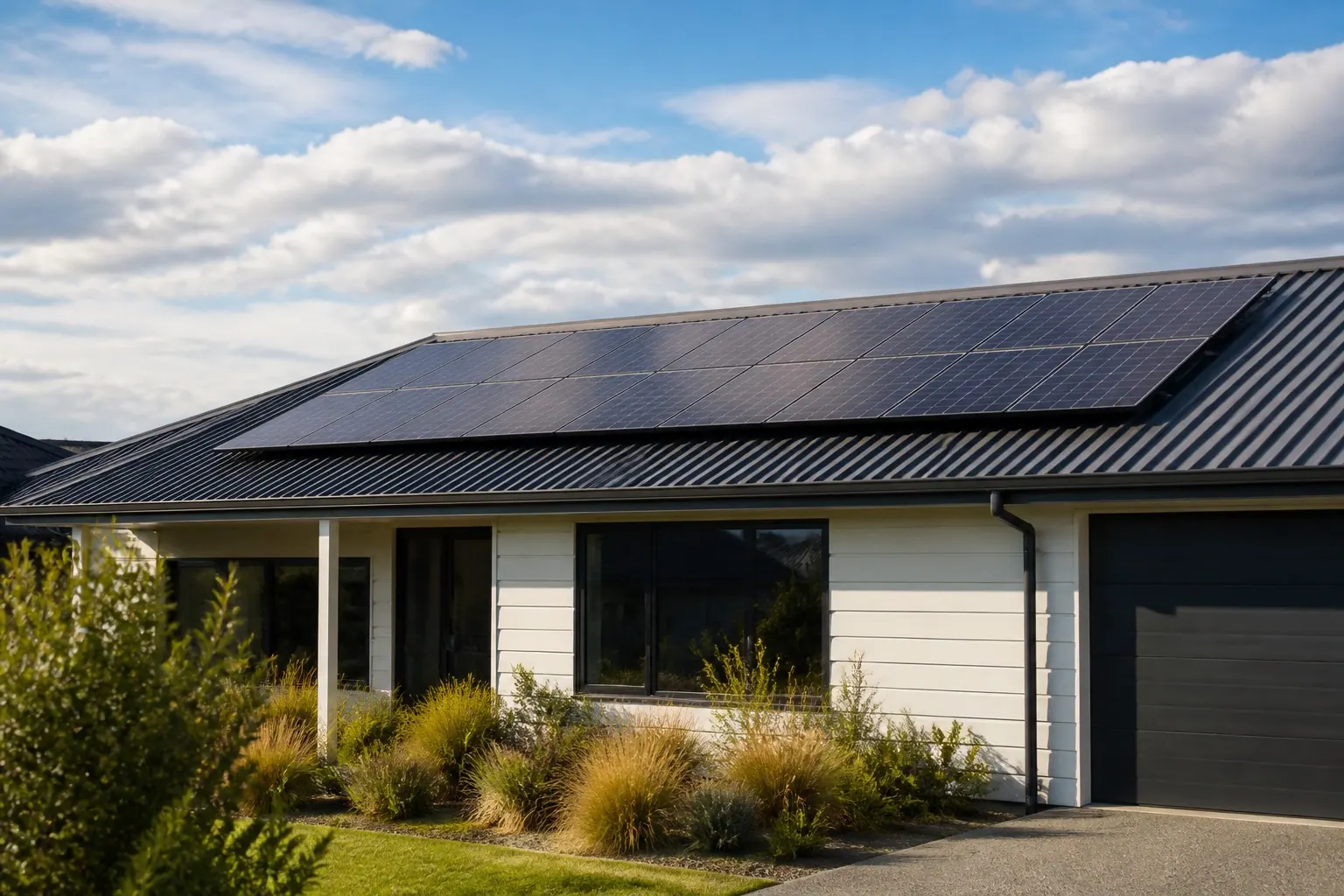
First, what do we mean by a Colorsteel roof?
COLORSTEEL is a specific New Zealand pre-painted steel roofing product, but homeowners often use "Colorsteel roof" to mean long-run metal roofing generally. Around Canterbury, that might include corrugate, five-rib, trapezoidal, tray or other profiled metal roof cladding.
That distinction matters for solar. The roof profile affects the mounting hardware, fixing position, roof traffic, cable route and how weatherproofing is handled. A quote that simply says "solar panels on roof" is not enough. You want to know that the installer has looked at the actual roof type.
| Roof detail | Why it matters | What to ask |
|---|---|---|
| Corrugate, rib or tray profile | Different profiles can need different brackets, clamps, rails and fixing positions. | Which mounting system suits this exact roof profile? |
| Roof pitch and available plane | Pitch, orientation and usable space influence system size and output. | Which roof plane are you using, and why? |
| Age and coating condition | Solar panels can last decades, so a tired roof can become an expensive future problem. | Should any roof maintenance happen before panels go on? |
| Coastal or exposed location | Salt, wind and unwashed areas can affect corrosion risk and maintenance. | Is this location mild, moderate, severe or more exposed? |
Roof condition matters more than the roofing label
A tidy long-run metal roof is usually simpler to work with than a fragile tile roof. But "metal" does not automatically mean "solar-ready". Canterbury homes can have older screw fixings, patches, lichen, coastal corrosion, poorly washed areas, loose flashings, old aerial penetrations or roof sections that are due for repainting or replacement.
EECA's roof guidance puts condition in plain terms: a new or recently refreshed roof is ideal, a roof with no major work expected inside 10 years is good, and a roof that needs major maintenance or replacement within 10 years is poor for solar planning. That does not mean you cannot install solar. It means the roof decision should come before the panel decision. [1]
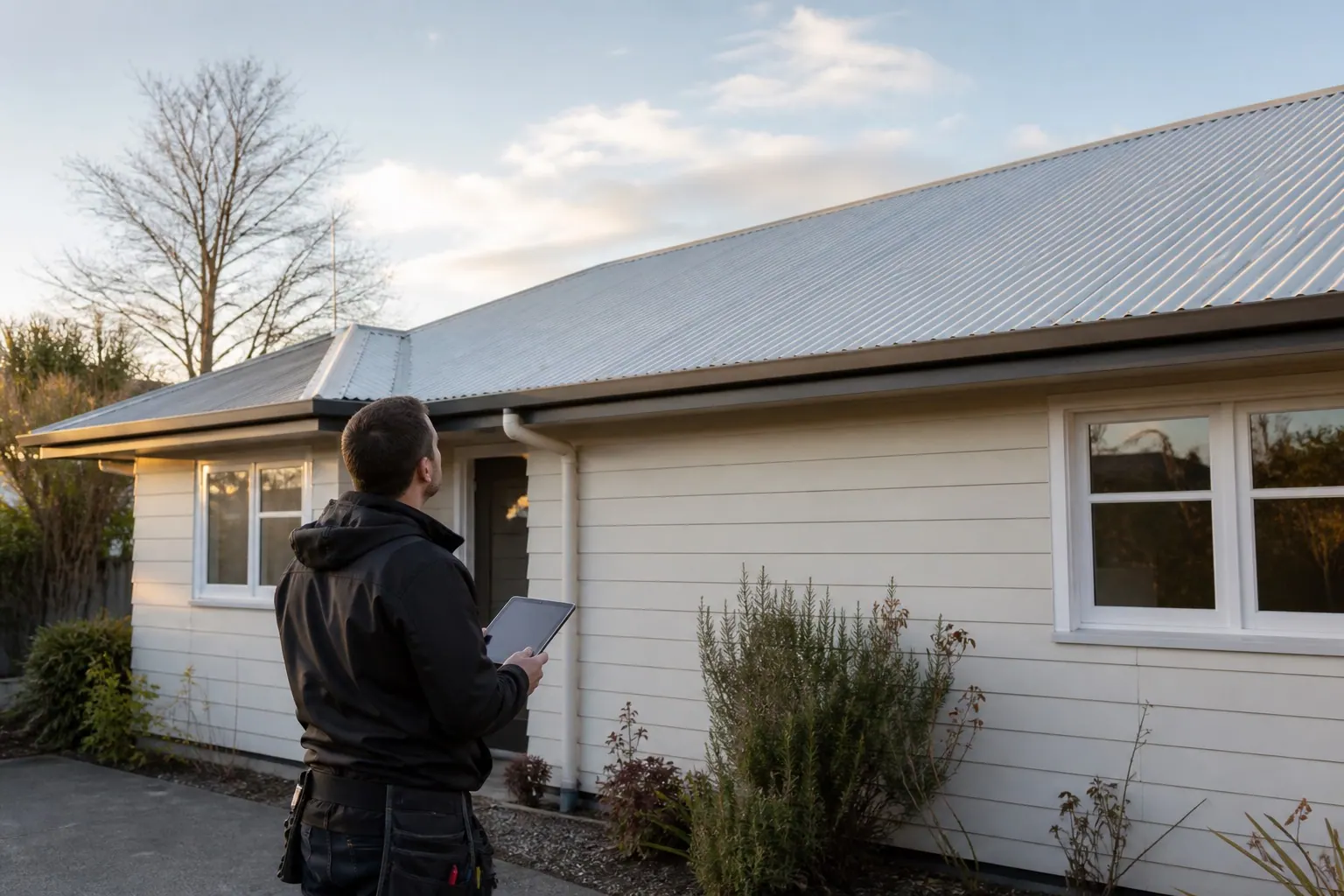
Removing and reinstalling panels later can be costly. Ask for a straight answer on whether roof repairs, screw replacement, repainting or re-roofing should be done first.
The mounting system is where good installers earn trust
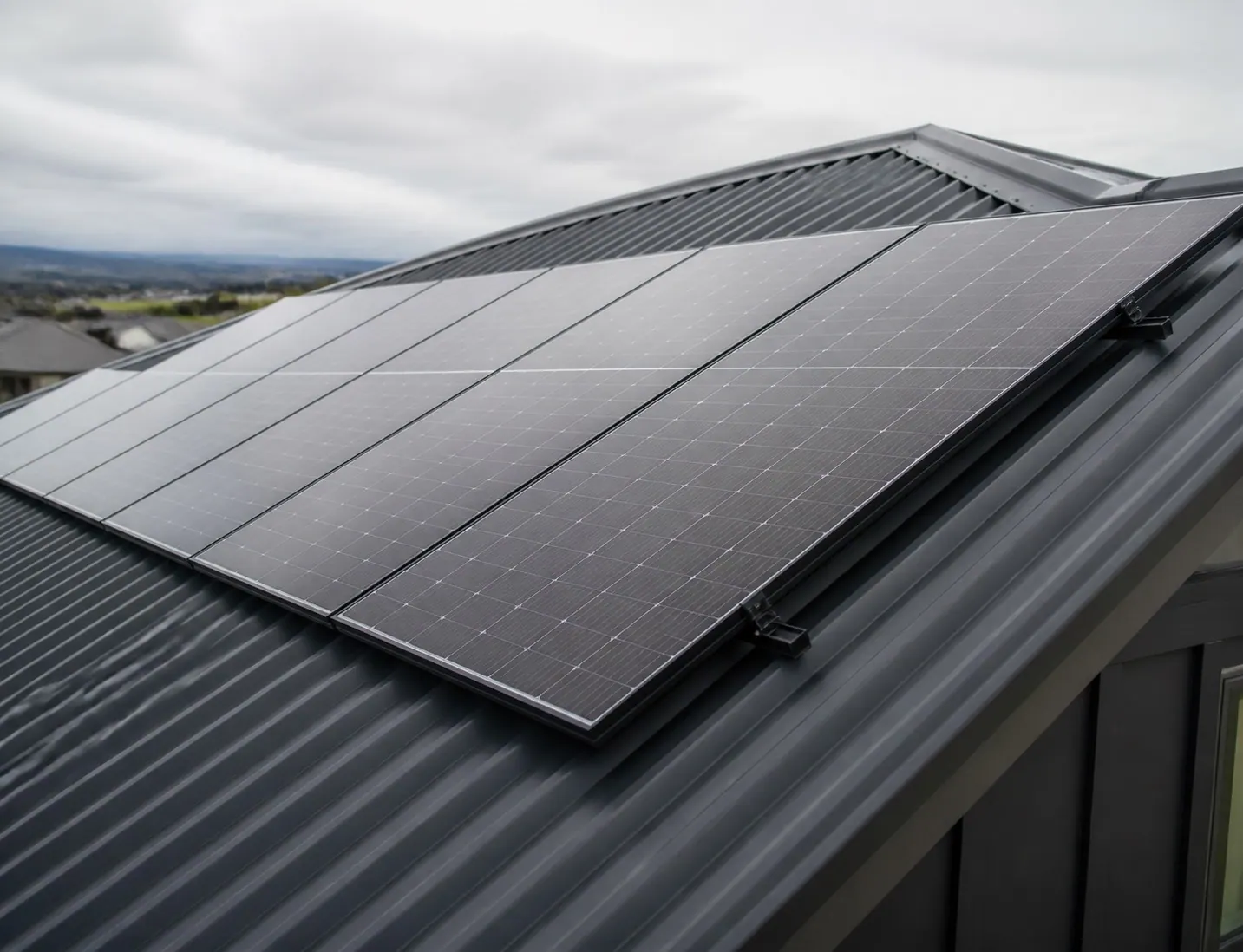
On a metal roof, the job is not just placing panels on rails. The installer needs to use a mounting system compatible with the roof profile, roof structure, wind loading and roofing material. Fixings, sealing washers, cable entries and penetrations need to be chosen and installed carefully so the roof remains weathertight.
The NZ Metal Roofing Manufacturers Code of Practice is written for the industry, not for casual weekend reading, but it shows why the details matter. It covers metal roof design, performance, material compatibility, corrosion, penetrations, fasteners and roof-mounted solar units. Those are exactly the areas you want your installer to understand, even if you never want to read a roofing code yourself. [6]
Ask for the fixing method in plain English
You do not need a technical drawing for every quote, but you should know whether the installer has allowed for the right rails, brackets, flashings, cable route, edge protection and roof access for your property.
Canterbury roof shape affects the solar design
The roof material is only one part of the design. EECA says roof space, direction, tilt, condition and shade all affect suitability. North-facing roof space is often the cleanest starting point, but east and west roof planes can still be useful, especially if your household uses power in the morning or late afternoon. [1]
In Canterbury, also watch for winter shade. A tree, chimney, neighbouring two-storey build, dormer, valley or small roof plane can change the real output. It is not enough for panels to fit on a roof diagram. They need to fit where they will produce useful power.
Good signs
Clear north, north-east, north-west, east or west roof areas; little midday shade; tidy metal roofing; safe access; enough roof space for the system size being quoted.
Pause and check
Heavy shade, very old roof sheets, obvious corrosion, complex roof shapes, multiple penetrations, future extensions, or a quote that ignores roof maintenance.
Building consent rules changed, but conditions still matter
As of the Building Performance guidance updated on 22 October 2025, roof-mounted solar panel arrays have specific building consent exemptions. The guidance lists roof-mounted arrays of less than 40 m2 under one exemption, and arrays over 40 m2 or where design wind speeds exceed 44 metres per second under another exemption that legally requires an authorised professional. [3]
This is good news for many homeowners, but it is not a free pass to ignore structure, weathertightness or local rules. Building Performance also says owners need to look at the detailed exemption conditions. If you are in an exposed location, have a large array, a complex roof, a commercial building, a rural shed or anything unusual, ask the installer who checks the wind and structural side. [3]
Keep this wording handy for quote calls
"Please confirm whether my roof-mounted solar array falls under the current exemption conditions, and who is responsible for any engineering, council, network or electrical compliance steps."
Warranty, corrosion and maintenance are not boring details
COLORSTEEL's warranty information explains that the local environment affects warranty category, with proximity to the coast a major factor. It also points homeowners back to maintenance requirements. In practical terms, a house in Sumner, New Brighton, Southshore or a windy coastal/rural pocket may deserve more careful corrosion and maintenance questions than a sheltered inland property. [4]
COLORSTEEL's care guidance also notes that rain does not wash every area, and that sheltered places, debris, mould, lichen, bird droppings and areas around roof penetrations can need attention. Solar panels can create more shaded and sheltered areas on the roof, so it is worth asking how roof care and panel cleaning should work after installation. [5]
Check whether roof penetrations, mounting hardware or roof traffic affect your product warranty.
Ask how the system deals with compatible metals, fixings, washers and runoff from roof-mounted equipment.
Find out how gutters, roof valleys, shaded areas and panels can be safely maintained over time.
The quote checklist for Colorsteel and long-run metal roofs
A solid Canterbury solar quote should make the roof assumptions visible. You should not have to guess whether scaffolding, edge protection, roof work, consent checks, inspections, metering or connection applications are included. EECA's quote guidance specifically encourages multiple quotes and clear checks around scope, roof work, inspections, meters and distribution requirements. [2]
WorkSafe says that when you hire an electrician, you should make sure they are licensed and issue a Certificate of Compliance for their work. Solar is not the place for unlicensed shortcuts. [7]
Solar panels on Colorsteel roofs: Canterbury questions
Can you install solar panels on a Colorsteel roof?
Often yes. Colorsteel-style, long-run metal and corrugated steel roofs are common in New Zealand and can work well for solar when the roof is sound, the profile is suitable, and the mounting system is installed correctly.
Is a metal roof better than a tile roof for solar?
It can be simpler to work with, but it depends on the property. A sound metal roof with good access and clear sun is usually attractive for installers. A tired metal roof, awkward profile, poor access or heavy shade can still add cost or reduce output.
Should I replace my roof before solar?
If the roof is close to needing replacement or major maintenance, price that work before solar. Panels can last 25 to 30 years when well maintained, so putting them on a roof that may need work soon can create avoidable future cost. [1]
Do I need council consent for rooftop solar in Canterbury?
Many roof-mounted systems may fall under national building consent exemptions, but the conditions matter. Array size, design wind speed, building type and local rules can change what is required. Ask the installer to confirm the current position for your property and document who is responsible for any checks.
Will panels make a metal roof leak?
A properly designed and installed system should protect weathertightness. The risk rises when the wrong mounting hardware is used, penetrations are poorly sealed, roof condition is ignored or the quote excludes roof work that should have been done first.
Free quote matching
Not sure if your Canterbury roof is solar-ready?
Tell us the basics and we use those details to route your request to Canterbury installers suited to your roof type, budget, power use and timing. It is free, and there is no obligation to go ahead.
Get my free quotesSources used
- EECA: Planning the right home solar system for you
- EECA: Understanding home solar quotes and installation
- Building Performance: Other structures - solar panel array exemptions
- COLORSTEEL: Warranty information and environmental categories
- COLORSTEEL: Care and maintenance guidance
- NZ Metal Roofing Manufacturers: Metal Roof and Wall Cladding Code of Practice v26.06
- WorkSafe: Getting electrical work done