
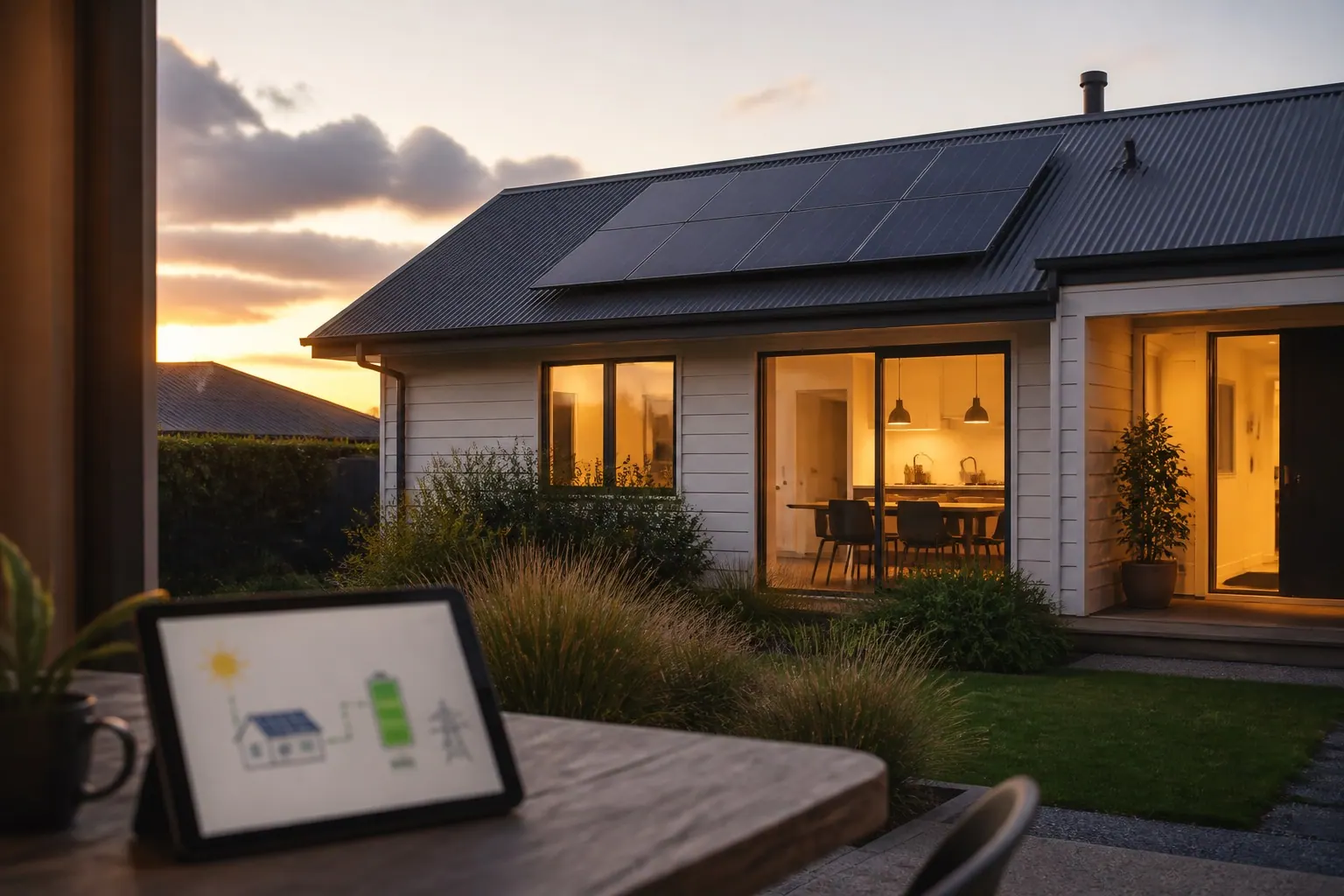
The simple battery decision guide
Start with your actual power pattern. A battery stores energy for later, so it earns its keep when "later" is when you really need power: evenings, mornings, outages, or peak-price periods. If your household can already shift hot water, appliances, EV charging or work-from-home use into the sunny part of the day, the battery may be less urgent.
| Your situation | Battery leans stronger | Solar-only leans stronger |
|---|---|---|
| Power use | Most use is after work, overnight or early morning. | You can use plenty of power while the sun is out. |
| Location | Rural property, outage concern, pumps, gates or essentials to protect. | Urban home with reliable supply and no backup priority. |
| Budget | You value backup and independence as well as savings. | You want the fastest path to bill savings and payback. |
| Future plans | EV, heat pump, electric hot water or time-of-use plan. | You want to test solar first and add storage later if needed. |
Ask for the quote to show solar-only and solar-plus-battery separately. That makes it much easier to see what the battery adds, what it saves, and whether the extra spend is doing useful work for your household.
What a solar battery actually does
In plain English: a home battery lets you keep some electricity for later. It can store solar power made during the day, and some systems can also charge from the grid when power is cheap. Then the battery can supply selected home loads when solar generation is low or power prices are higher.
The catch is that a battery is not magic backup for the whole house unless the system is designed that way. Backup needs the right inverter, wiring and circuits. In some homes it may keep only essentials running, such as lighting, refrigeration, Wi-Fi, garage doors or selected outlets. That is still valuable, but it needs to be stated clearly in the quote.
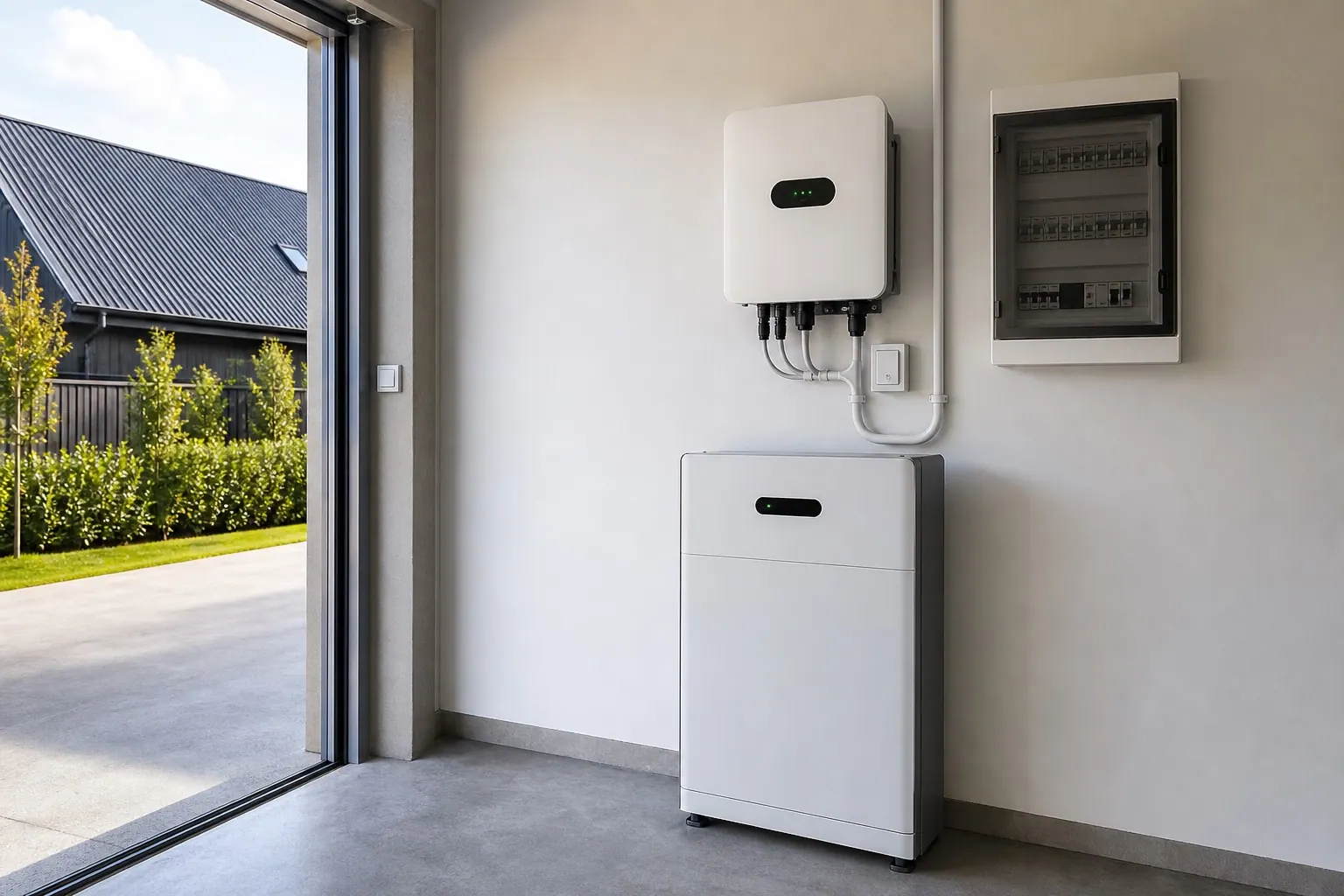
Important detail
Backup power is a design feature, not an automatic promise.
Ask what stays on in an outage, whether the system can operate safely when the grid is down, and how long the battery is expected to support those loads.
Why the Canterbury battery question is a little different
Canterbury homes often have a familiar pattern: good roof space, plenty of electric heating and hot water, and a lot of demand when the sun is weaker or gone. Cold winter evenings are the awkward bit. Solar panels may still make useful energy during the year, but the evening peak is exactly where solar-only systems are weakest.
EECA's residential solar research looked at Christchurch among other centres and found that households using more electricity, especially in the morning and daytime, tend to see the strongest returns from solar PV. The same research notes that batteries are the real tool for meeting morning and evening peak demand with local supply, while also warning that battery cost still matters. [3]
If daytime use is decent and outages are not a big concern, panels plus smart usage can be the cleaner first step.
Lifestyle blocks, farms, pumps and longer outages can make selected backup circuits worth discussing early.
EV charging, heat pumps and electric hot water can change the right system size and battery choice over time.
Solar battery cost and payback: keep the maths honest
EECA lists a typical battery add-on cost of $5,000 to $15,000, depending on type and capacity. Its example solar-plus-battery packages range from $13,500 for a small system with a 5 kWh battery to $40,000 for a large system with a 20 kWh battery. Those figures include standard installation costs and GST, but your quote can still vary with equipment, roof access, electrical work, backup design and installer scope. [2]
| Example package | Solar size | Battery size | Typical cost |
|---|---|---|---|
| Small system with battery | 3 kW | 5 kWh | $13,500 |
| Medium system with battery | 5 kW | 10 kWh | $21,500 |
| Large system with battery | 10 kW | 20 kWh | $40,000 |
If a quote only shows one blended payback number, ask for the solar-only payback and the battery payback to be separated.
This is where a lot of battery quotes get fuzzy. A battery can improve self-consumption and make a home feel more resilient, but it also increases the upfront cost. EECA says batteries typically extend the payback period, so a battery should not be sold as an automatic financial upgrade. [1]
Battery-ready solar can be the sensible middle option
If you are unsure, battery-ready is often the calmest answer. You install solar now, keep the initial cost lower, and make sure the inverter, switchboard location and monitoring setup do not make a future battery awkward. EECA notes that many homes install panels first and add a battery later, but compatibility still needs checking with the installer. [1]
Ask for now
- Solar-only price and expected year-one savings.
- Battery-ready inverter or upgrade path.
- Space and location for future battery storage.
- Any switchboard or cabling work worth doing upfront.
Leave for later
- Exact battery size after you have real solar data.
- Backup circuits if your needs change.
- EV charging strategy once you know driving habits.
- Power plan choice after the system is operating.
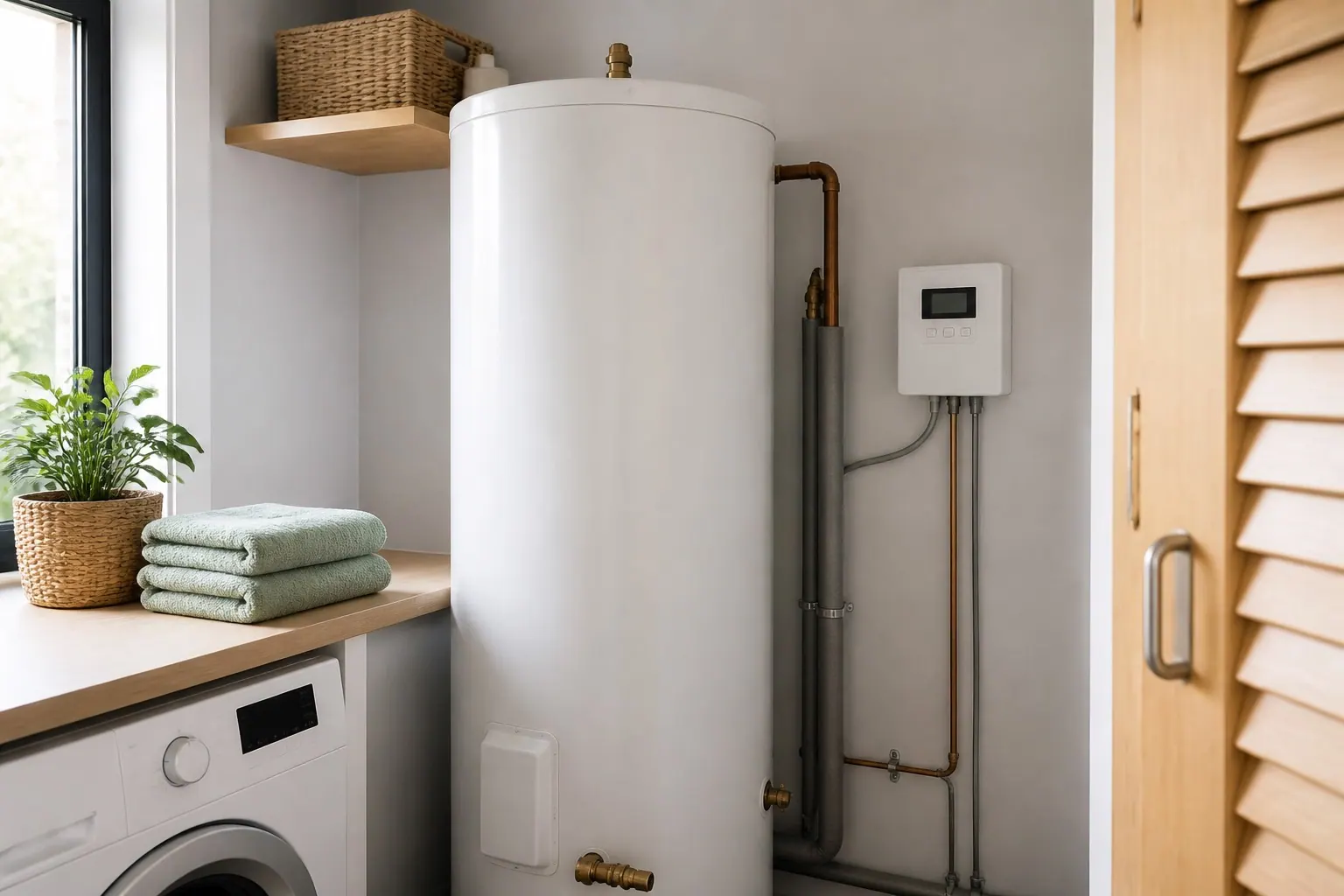
Before buying a battery, check the cheaper ways to use more solar
A battery is not the only way to store value from daytime solar. EECA points to hot water timers and diverters as lower-cost add-ons that can help households use more solar by preheating an electric hot water cylinder while the sun is shining. That is not the same as backup power, but it can be a better first move for homes that mainly want better savings. [1] [3]
Power plans, export rates and why battery savings move around
The best power plan depends on the system. EECA says a flat-rate plan is often simpler without a battery, while a time-of-use plan can suit homes with a battery because stored energy can be used when grid power is expensive. Buy-back rates can vary, and the rate you get for exported solar is usually lower than what you pay to buy electricity from the grid. See the Canterbury solar buy-back guide for a whole-bill comparison checklist. [4]
Export limits matter too. The Electricity Authority's 2026 export-limit changes introduced a default 10 kW static export limit for qualifying straightforward small-scale distributed generation, while allowing lower limits where a network assessment justifies them. Your installer should check the relevant Canterbury network process rather than assuming every property can export the same amount. [7]
Battery safety and compliance: boring is good
Home batteries are electrical equipment, not furniture. WorkSafe recommends using a registered electrician for PV systems and warns that battery storage needs proper installation and location because some systems can create safety risks if handled incorrectly. It also points to relevant PV, inverter and battery installation standards. [6]
Ask where the battery will go, what clearances are required, whether the quote includes inspection and certification, and who is responsible if the manufacturer, insurer or network has extra requirements.
Questions to ask before saying yes to a solar battery quote
Battery quotes need more scrutiny than panel-only quotes because small assumptions can change the answer. EECA recommends getting two or three quotes and checking that the quote clearly lists costs, components, inspections, metering, distribution upgrade requirements and battery storage installation where relevant. [5]
Ask every installer
- What is the solar-only price, and what does the battery add?
- What is the usable battery capacity, not just the headline size?
- Does the battery provide backup power, and to which circuits?
- What assumptions are used for self-consumption and export rates?
- Does the quote include switchboard work, metering and inspection?
- What are the battery warranty terms and expected service life?
- If I skip the battery now, what does battery-ready really mean?
If the answers are vague, slow down. You are not being difficult; you are trying to compare real quotes, not sales language.
Canterbury solar battery questions
Is a solar battery worth it in Christchurch?
It can be, but it depends on your evening use, backup needs, battery price, power plan and quote assumptions. If the main goal is fastest payback, compare solar-only first. If the goal includes evening self-use or selected backup power, ask installers to price the battery separately.
How much does a solar battery add to a Canterbury quote?
EECA lists $5,000 to $15,000 as a typical battery add-on range in New Zealand. Larger capacity, backup circuits, inverter changes, switchboard work or tricky installation locations can change the installed price.
What size solar battery do most homes need?
EECA describes typical capacity bands of roughly 5 to 10 kWh, 10 to 15 kWh, and 20+ kWh. Bigger is not always better. A small solar system may not fully use a large battery, and an oversized battery can hurt the payback.
Can I add a battery to existing solar panels?
Often, but not always neatly. It depends on your inverter, electrical setup, battery type and available installation location. Ask a solar installer whether your existing system is battery-compatible and what would need upgrading.
Is a hot water diverter better than a battery?
It depends what you want. A diverter or timer can be a lower-cost way to use more daytime solar for hot water. It will not give backup power, but it may improve savings before you spend thousands more on battery storage.
Free quote matching
Want battery and no-battery quotes for your Canterbury home?
Tell us what you are trying to solve and we use those details to route your request to installers suited to your roof, budget, power use and storage goals. It is free, and there is no obligation.
Get my free quotesSources used
- EECA: Planning the right home solar system for you
- EECA: Breaking down home solar costs and savings
- EECA: Understanding the value of residential solar PV and storage in New Zealand
- EECA: Make the most of your home solar system
- EECA: Understanding home solar quotes and installation
- WorkSafe: DIY solar installations
- Electricity Authority: Export Limits Amendment 2026
- EECA: Bank loans for home energy upgrades